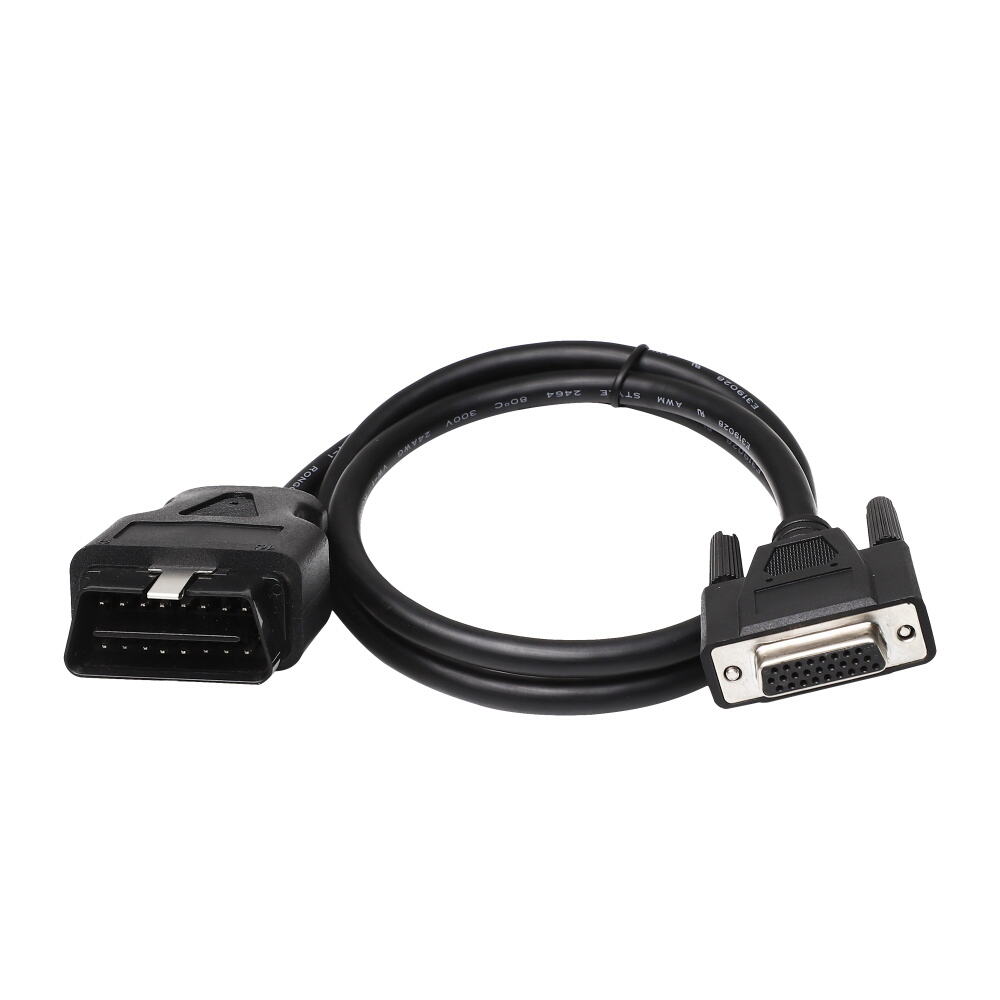
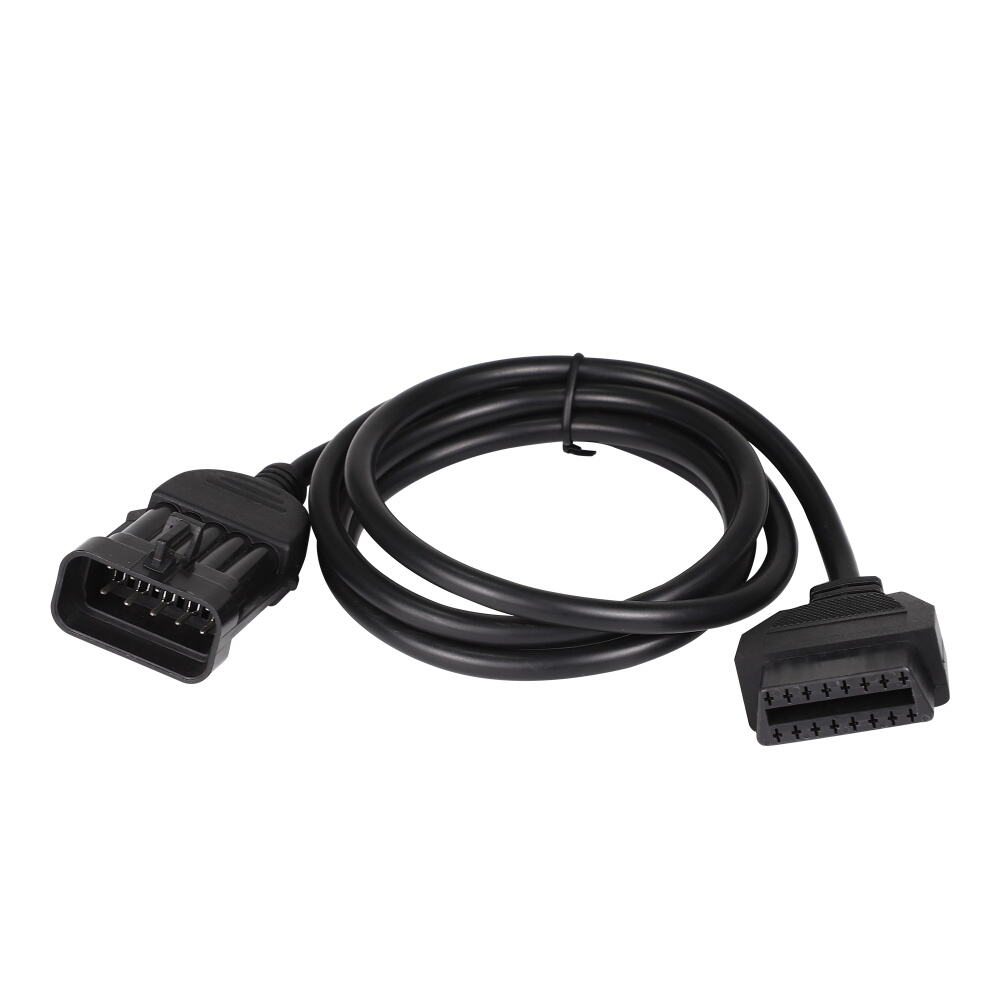
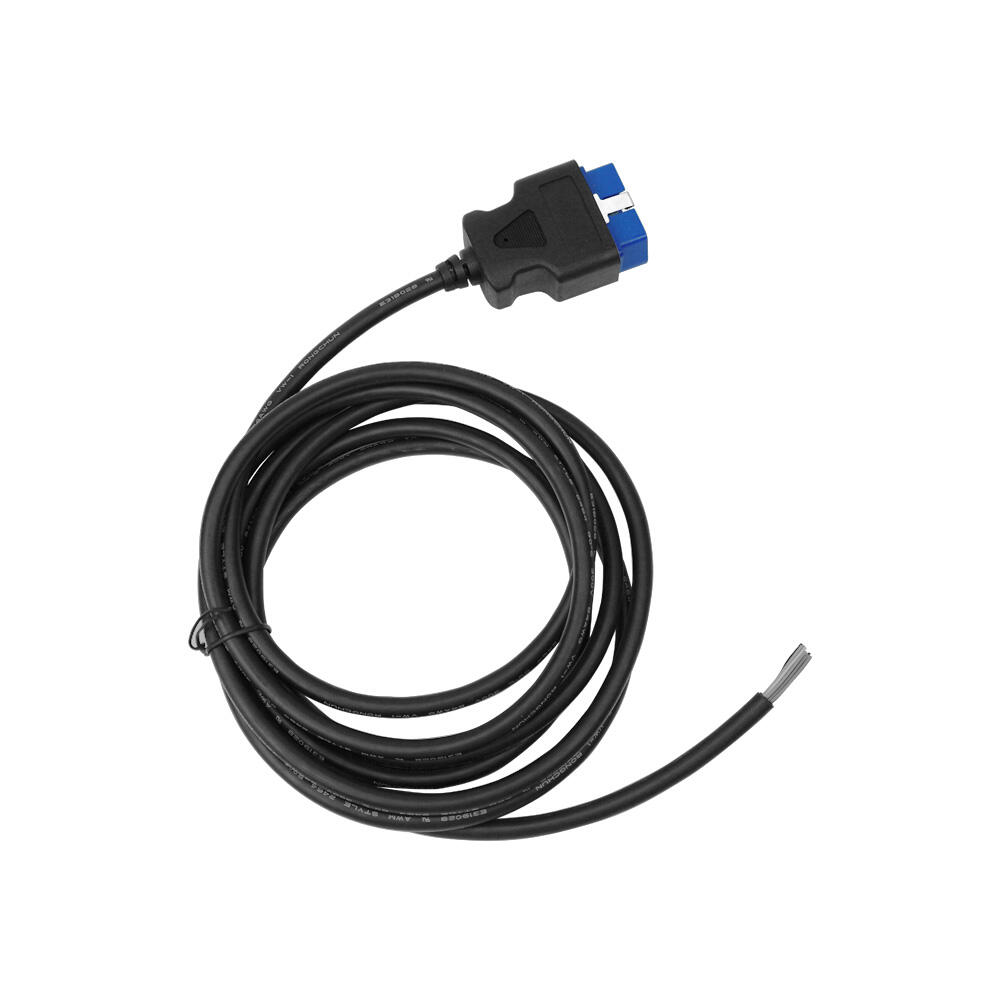
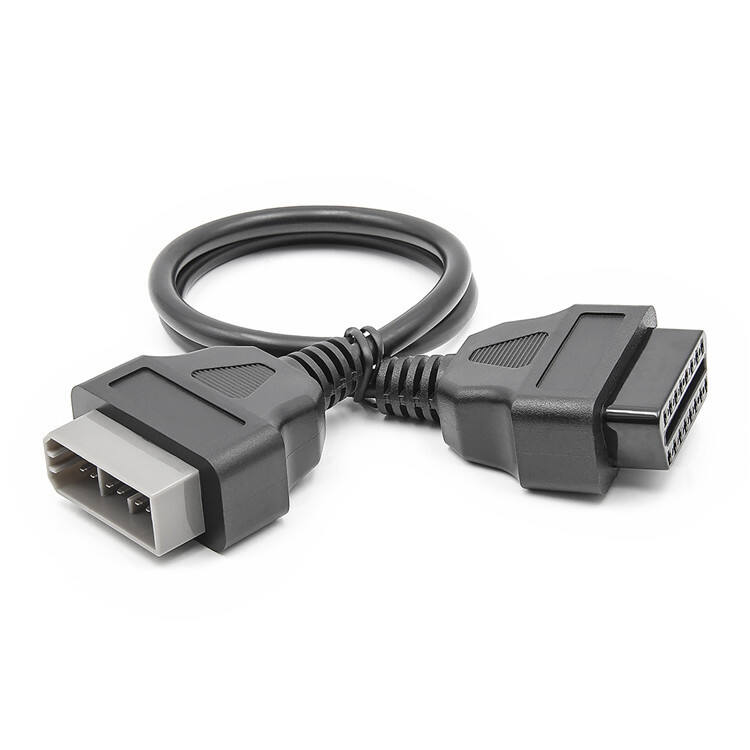
OBD Extender Cable - Professional Diagnostic Extension Solution for Universal Vehicle Compatibility

All Categories

Get a Free Quote

Our representative will contact you soon.
Email
Name
Company Name
Message
0/1000

obd extender cable

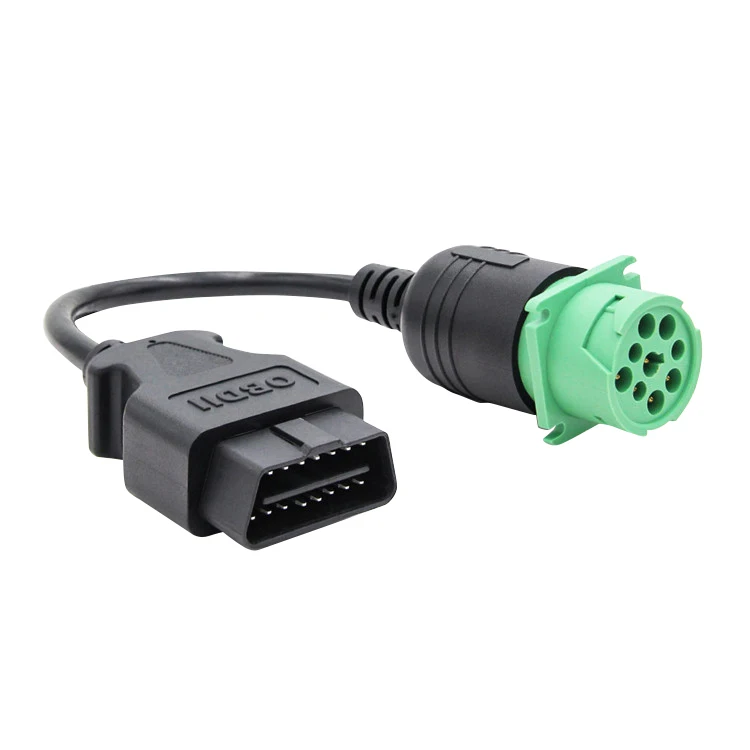
An obd extender cable serves as a fundamental accessory for vehicle diagnostics and monitoring systems, providing enhanced flexibility and convenience when accessing the standard OBD-II port in modern vehicles. This specialized cable creates a physical extension between the vehicle's diagnostic port and scanning devices, allowing users to position their diagnostic tools in more accessible locations. The primary function of an obd extender cable involves transmitting data signals between the vehicle's onboard computer system and external diagnostic equipment without compromising signal integrity or communication speed. These cables typically feature male and female OBD-II connectors that meet industry standards, ensuring universal compatibility across various vehicle makes and models manufactured after 1996. The technological architecture of an obd extender cable incorporates high-quality copper wiring and precision-engineered connectors that maintain reliable data transmission across all sixteen pins of the OBD-II interface. Advanced shielding technology protects against electromagnetic interference, ensuring accurate diagnostic readings even in electrically noisy environments. The cable length varies from one foot to several feet, offering different extension options to suit various installation scenarios and workspace configurations. Applications for an obd extender cable span multiple contexts, including professional automotive repair shops, mobile diagnostic services, fleet management operations, and personal vehicle maintenance. Technicians utilize these cables to perform continuous monitoring during test drives, allowing diagnostic equipment to remain securely mounted while the vehicle is in motion. The obd extender cable also proves invaluable when the factory-installed diagnostic port location is inconvenient, cramped, or difficult to access due to dashboard design or aftermarket modifications. Racing enthusiasts and performance tuners rely on these cables to maintain permanent connections to data logging devices while preserving easy access to the diagnostic port for routine checks. The durability of quality obd extender cable products ensures long-term reliability through reinforced strain relief points, robust connector housings, and weather-resistant materials that withstand the demanding conditions of automotive environments.

New Product Releases

The obd extender cable delivers immediate practical benefits that transform how vehicle owners and technicians interact with automotive diagnostic systems. First and foremost, this accessory eliminates the physical strain and awkward positioning required when working with diagnostic tools in confined spaces beneath the dashboard. Instead of contorting into uncomfortable positions to access hard-to-reach ports, users can relocate their scanning equipment to convenient locations within the vehicle cabin or even outside the vehicle entirely. This ergonomic advantage becomes particularly valuable during extended diagnostic sessions that might otherwise cause physical discomfort or fatigue. The flexibility provided by an obd extender cable enables simultaneous vehicle operation and data monitoring, a capability essential for diagnosing intermittent issues that only manifest under specific driving conditions. Technicians can secure diagnostic tablets or scan tools in visible positions while driving, observing real-time data streams without distraction or safety concerns. This continuous monitoring capability significantly reduces diagnostic time by capturing fault conditions as they occur rather than relying on stored trouble codes that may not provide complete information. Another significant advantage involves protecting expensive diagnostic equipment from accidental damage. When scan tools connect directly to factory ports, they often protrude into the driver's footwell area where they risk being kicked, bumped, or damaged during normal vehicle operation. An obd extender cable allows users to position sensitive electronics in protected locations away from potential impact zones. The cable also reduces wear and tear on the vehicle's built-in diagnostic port by minimizing the frequency of connector insertion and removal. Instead of repeatedly plugging and unplugging devices directly into the factory port, users maintain a semi-permanent cable connection while connecting various tools to the extension end. This preservation of the original port maintains its reliability and prevents the connector looseness that develops from excessive use. For businesses operating multiple diagnostic tools or serving various vehicle types, an obd extender cable streamlines workflow efficiency by enabling quick tool changes without accessing cramped port locations repeatedly. Fleet managers benefit from permanent cable installations that facilitate rapid vehicle inspections and routine diagnostic checks across multiple units. The cost-effectiveness of an obd extender cable represents another practical advantage, as this simple accessory eliminates the need for expensive wireless diagnostic systems while delivering comparable positioning flexibility. Home mechanics appreciate how these cables make DIY diagnostics more accessible and less intimidating by bringing the connection point to comfortable working positions. The universal compatibility ensures that a single quality obd extender cable works across different vehicles in a household or business fleet, maximizing the return on this modest investment while supporting various diagnostic and monitoring applications without requiring specialized adapters or additional equipment purchases.

Latest News

How to choose the right J1939 connection cable based on vehicle model and communication protocol?

10

Feb

How to choose the right J1939 connection cable based on vehicle model and communication protocol?

Selecting the appropriate J1939 connection cable is crucial for establishing reliable communication between electronic control units in commercial vehicles and heavy-duty equipment. The SAE J1939 standard defines the communication protocol used acros...
View More
How can customized J1939 connection cables meet unique cable needs for special machinery?

10

Feb

How can customized J1939 connection cables meet unique cable needs for special machinery?

Modern industrial machinery and heavy equipment rely heavily on sophisticated communication protocols to ensure optimal performance and diagnostics. Among these protocols, the J1939 standard has emerged as a critical component for vehicle and machine...
View More
Why Is the Choice of Gauge Critical for Your J1939 Connection Cable Performance?

02

Apr

Why Is the Choice of Gauge Critical for Your J1939 Connection Cable Performance?

The choice of wire gauge in your J1939 connection cable directly determines whether your industrial communication system will perform reliably or suffer from costly signal degradation and network failures. When engineers select the wrong gauge for th...
View More
How to properly route and secure a Tesla wiring harness during a vehicle restoration project?

02

Apr

How to properly route and secure a Tesla wiring harness during a vehicle restoration project?

Restoring a Tesla vehicle requires meticulous attention to the electrical system, particularly when dealing with the complex network of wiring harnesses that power everything from the drivetrain to the infotainment system. The Tesla wiring harness re...
View More

Get a Free Quote

Our representative will contact you soon.
Email
Name
Company Name
Message
0/1000

obd extender cable

Enhanced Accessibility and Workspace Flexibility

Enhanced Accessibility and Workspace Flexibility

The obd extender cable revolutionizes diagnostic accessibility by fundamentally changing how technicians and vehicle owners interact with their vehicle's computer systems. Traditional diagnostic port locations often reside in the most inconvenient positions imaginable, tucked deep beneath dashboards, behind trim panels, or in cramped footwell areas with minimal lighting and restricted access. These challenging locations force users into awkward positions that make extended diagnostic work uncomfortable and sometimes nearly impossible for individuals with mobility limitations or physical constraints. The obd extender cable solves this universal frustration by bringing the connection point to wherever users need it most. Professional technicians can route the cable to their preferred working position, whether that means mounting a diagnostic tablet on the windshield for clear visibility during test drives, positioning equipment on the passenger seat for easy access, or even extending the connection outside the vehicle for dyno testing and performance tuning applications. This spatial freedom transforms diagnostic procedures from frustrating struggles into smooth, efficient operations. The workspace flexibility extends beyond simple convenience to enable diagnostic techniques that would be impractical or impossible with direct port connections. Mechanics performing wheel alignment diagnostics can position their scan tools where they remain visible while adjusting suspension components. Transmission specialists can monitor real-time shift data while simultaneously accessing transmission components that might be on the opposite side of the vehicle from the diagnostic port. The obd extender cable essentially eliminates the physical constraints that have historically limited diagnostic workflows, allowing professionals to design their workspace around optimal efficiency rather than adapting to fixed port locations. For mobile diagnostic services, this flexibility becomes even more critical as technicians work in various environments from customer driveways to parking lots where lighting, weather, and space conditions vary dramatically. The cable enables these professionals to adapt quickly to any situation, maintaining consistent service quality regardless of environmental challenges. Home enthusiasts gain similar benefits, as the obd extender cable removes the intimidation factor associated with automotive diagnostics by making the process more approachable and user-friendly through improved physical accessibility and workspace organization.
Superior Signal Integrity and Reliable Data Transmission

Superior Signal Integrity and Reliable Data Transmission

The technical excellence of a quality obd extender cable lies in its ability to maintain perfect signal integrity across extended distances while supporting the complex data protocols that modern vehicles employ for diagnostic communication. Vehicle diagnostic systems transmit information using sophisticated communication protocols including CAN bus, J1850 PWM, J1850 VPW, ISO 9141-2, and ISO 14230-4 KWP2000, each with specific electrical characteristics and timing requirements that must be preserved for accurate diagnostic communication. An engineered obd extender cable maintains these precise electrical specifications through carefully selected conductor materials, proper wire gauge sizing, and appropriate impedance matching that prevents signal degradation, reflection, or distortion. The internal construction typically features oxygen-free copper conductors that provide excellent electrical conductivity with minimal resistance, ensuring voltage drops remain negligible even across longer cable lengths. Each of the sixteen pins in the OBD-II connector serves specific functions, from power delivery and ground connections to various communication protocols and manufacturer-specific interfaces. A quality obd extender cable replicates all sixteen connections with equal precision, ensuring complete functionality regardless of which diagnostic protocols a particular vehicle employs. Advanced shielding technology represents another critical technical feature that distinguishes superior obd extender cable products from inferior alternatives. Modern vehicles contain numerous electronic systems operating simultaneously, creating electromagnetic environments with significant potential for interference. The ignition system generates electrical noise during spark events, fuel injectors create inductive spikes during operation, and various motors and solenoids contribute additional electromagnetic interference throughout the vehicle's electrical environment. Without proper shielding, these interference sources could corrupt diagnostic signals, leading to communication errors, incomplete data transmission, or completely failed diagnostic sessions. Premium obd extender cable designs incorporate braided shielding or foil wrapping around the conductor bundle, creating a Faraday cage effect that blocks external electromagnetic interference while preventing the diagnostic signals themselves from radiating and potentially interfering with other vehicle systems. The connector quality equally impacts reliability, as precision-manufactured terminals ensure proper contact pressure and electrical connection at both the vehicle port and diagnostic tool interfaces. Gold-plated contact surfaces resist corrosion and oxidation that could increase contact resistance over time, maintaining consistent performance throughout the cable's service life even in harsh automotive environments with temperature extremes, humidity, and chemical exposure from automotive fluids and cleaning products.

Durability and Long-Term Investment Value

Durability and Long-Term Investment Value

The construction quality and durability characteristics of a premium obd extender cable determine whether this accessory represents a one-time investment or a recurring expense due to repeated failures and replacements. Professional-grade cables incorporate multiple design features specifically engineered to withstand the mechanical stresses, environmental conditions, and usage patterns typical of automotive diagnostic applications. Strain relief engineering at both connector ends represents perhaps the most critical durability feature, as the junction between flexible cable and rigid connector historically represents the primary failure point in extension cables across all applications. Quality obd extender cable designs feature molded strain relief boots that gradually transition stress from the rigid connector housing to the flexible cable body, preventing the sharp bending angles that cause conductor fatigue and eventual wire breakage. These reinforced zones distribute mechanical stress across a larger area, allowing the cable to endure thousands of connection cycles and various positioning arrangements without developing the internal breaks that cause intermittent connections or complete failures. The cable jacket material selection balances flexibility for easy routing with abrasion resistance to withstand contact with vehicle carpet, floor mats, and other surfaces during use. Premium cables often employ thermoplastic elastomer or polyurethane jacketing that remains flexible across wide temperature ranges while resisting degradation from automotive chemicals including gasoline, oil, brake fluid, and common cleaning solvents. The connector housing construction similarly emphasizes longevity, with impact-resistant plastics that protect internal components from the inevitable bumps and drops that occur in active work environments. Professional technicians who use diagnostic equipment daily subject their obd extender cable to demanding conditions that quickly reveal any construction weaknesses. These users recognize that cable failures during critical diagnostic procedures result in lost productivity, frustrated customers, and potential safety concerns if failures occur during test drives with monitoring equipment. The investment value of a quality obd extender cable extends beyond simple longevity to encompass the reliability that prevents workflow disruptions and maintains professional service standards. For business applications, cable failure rates directly impact operational efficiency and service capacity. A shop using inferior cables might experience failures requiring technician time for troubleshooting, replacement cable procurement, and repeated diagnostic procedures, with each incident consuming billable hours and reducing daily service capacity. Conversely, durable obd extender cable products deliver years of reliable service, essentially becoming transparent tools that technicians trust implicitly without concerns about reliability or performance. The total cost of ownership perspective reveals that premium cables with higher initial costs frequently prove more economical than budget alternatives when evaluated across their service lifetime, as superior durability eliminates replacement costs, reduces downtime, and maintains consistent diagnostic capabilities without the frustration and inefficiency associated with unreliable equipment.

Get a Free Quote

Our representative will contact you soon.
Email
Name
Company Name
Message
0/1000

Get a Free Quote

Our representative will contact you soon.
Email
Name
Company Name
Message
0/1000

Get a Free Quote

Our representative will contact you soon.
Email
Name
Company Name
Message
0/1000

Get a Free Quote

Our representative will contact you soon.
Email
Name
Company Name
Message
0/1000