

 EN
EN
Modern industrial machinery and heavy equipment rely heavily on sophisticated communication protocols to ensure optimal performance and diagnostics. Among these protocols, the J1939 standard has emerged as a critical component for vehicle and machinery networking, particularly in commercial vehicles, agricultural equipment, and construction machinery. The demand for specialized J1939 connection cables continues to grow as manufacturers seek solutions that can handle the unique requirements of their equipment while maintaining reliable data transmission and power delivery.
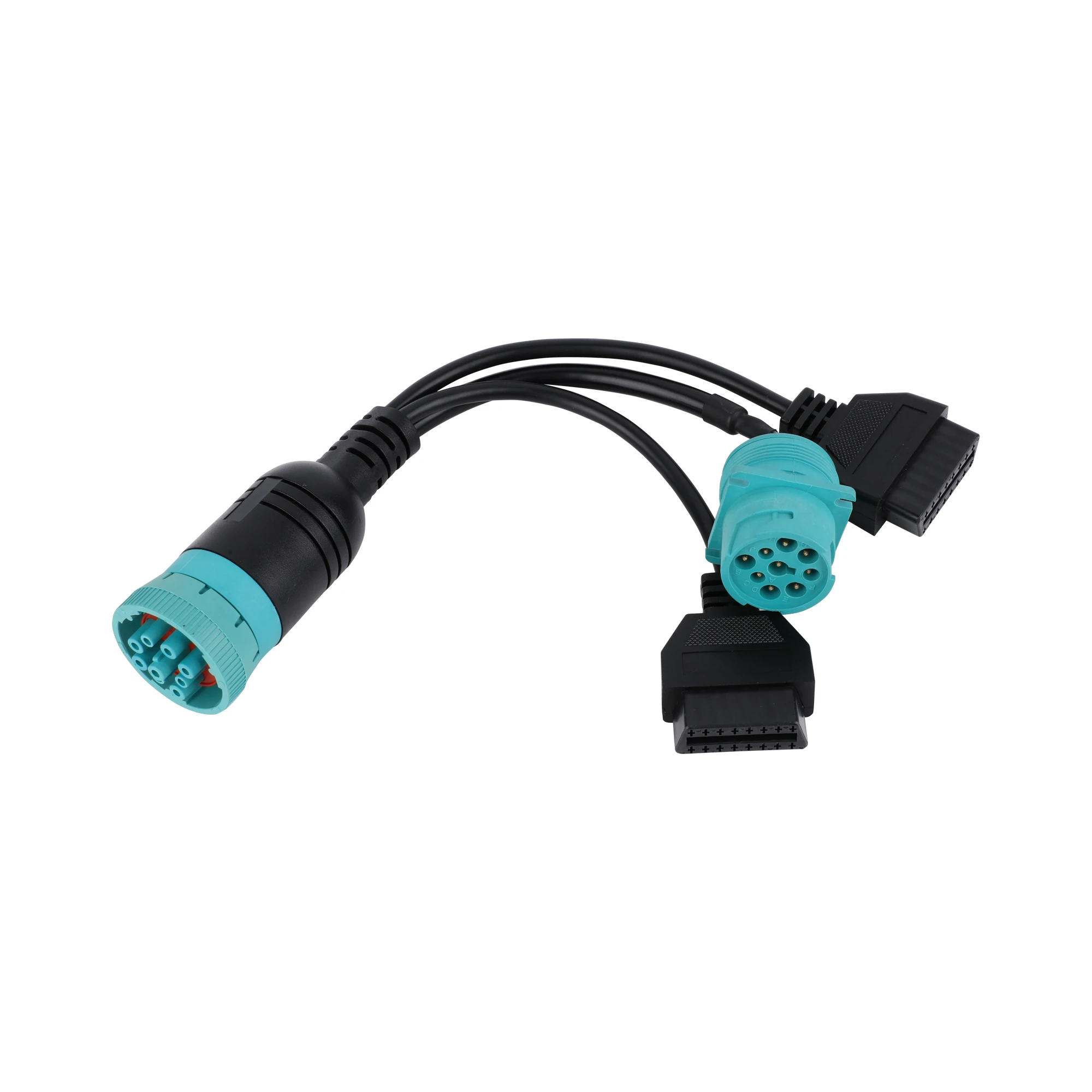
The complexity of modern machinery often requires customized cable solutions that go beyond standard off-the-shelf products. Engineers and manufacturers face challenges in finding J1939 connection cables that can withstand harsh operating environments, accommodate specific connector configurations, and meet precise electrical specifications. Understanding how customized solutions can address these challenges is essential for anyone involved in machinery design, maintenance, or procurement.
Customization in J1939 connection cables extends far beyond simple length adjustments or connector variations. It encompasses a comprehensive approach to cable design that considers environmental factors, electrical performance requirements, mechanical constraints, and long-term reliability needs. This level of customization ensures that each cable solution is perfectly suited to its intended application, whether in a mining truck operating in extreme temperatures or precision agricultural equipment requiring interference-free communication.
Understanding J1939 Protocol Requirements
Protocol Specifications and Standards
The J1939 protocol represents a sophisticated communication standard specifically developed for heavy-duty vehicles and industrial machinery. This protocol operates on a Controller Area Network (CAN) bus architecture, enabling multiple electronic control units to communicate efficiently within a single system. J1939 connection cables must support specific electrical characteristics, including differential signaling, precise impedance matching, and robust shielding to prevent electromagnetic interference.
Compliance with SAE J1939 standards requires careful attention to cable construction details, including conductor materials, insulation properties, and shielding effectiveness. The protocol demands cables capable of handling data rates up to 250 kbps while maintaining signal integrity across extended cable runs. Understanding these fundamental requirements is crucial when specifying customized J1939 connection cables for specialized applications.
The physical layer specifications of J1939 also dictate specific voltage levels, termination requirements, and bus topology considerations. Custom cable solutions must accommodate these technical demands while providing the flexibility needed for unique installation scenarios. This includes considerations for cable routing, connector accessibility, and maintenance requirements specific to each machinery application.
Electrical Performance Characteristics
Electrical performance in J1939 connection cables centers around maintaining proper impedance characteristics, minimizing signal attenuation, and ensuring reliable power delivery alongside data transmission. The differential nature of J1939 signaling requires twisted pair construction with precise impedance control, typically maintaining 120-ohm characteristic impedance throughout the cable length. Custom solutions can optimize these characteristics for specific operating environments and installation requirements.
Power delivery capabilities in J1939 connection cables often require careful consideration of current carrying capacity, voltage drop calculations, and thermal management. Many applications require cables to carry both communication signals and power for connected devices, necessitating multi-conductor designs with appropriate current ratings. Customization allows for optimization of conductor sizes and configurations to meet specific power requirements while maintaining signal integrity.
Grounding and shielding effectiveness play critical roles in ensuring reliable communication in electrically noisy environments. Custom J1939 connection cables can incorporate enhanced shielding designs, multiple ground paths, and specialized connector configurations to address specific electromagnetic compatibility challenges encountered in unique machinery applications.
Environmental Challenges in Special Machinery
Temperature Extremes and Thermal Cycling
Special machinery often operates in environments with extreme temperature variations that can severely impact standard cable performance. Mining equipment, for example, may encounter temperatures ranging from -40°C in winter surface operations to +85°C in underground environments. J1939 connection cables designed for such applications require specialized insulation materials and conductor technologies that maintain performance across these temperature ranges.
Thermal cycling effects can cause repeated expansion and contraction of cable components, leading to mechanical stress and potential failure points. Customized cable designs can address these challenges through careful material selection, stress relief techniques, and construction methods that accommodate thermal movement. This includes selection of insulation compounds with appropriate glass transition temperatures and flexibility retention at temperature extremes.
Heat dissipation considerations become particularly important in high-power applications where J1939 connection cables must carry significant current loads alongside communication signals. Custom solutions can incorporate enhanced conductor configurations, improved insulation thermal properties, and specialized jacketing materials to manage heat generation and transfer effectively.
Chemical Exposure and Contamination Resistance
Industrial machinery frequently operates in environments where exposure to chemicals, oils, hydraulic fluids, and other contaminants is unavoidable. Standard J1939 connection cables may not provide adequate protection against these substances, leading to premature failure and unreliable operation. Customized cable solutions can incorporate specialized jacketing materials specifically formulated to resist particular chemical exposures encountered in specific applications.
Agricultural equipment presents unique challenges with exposure to fertilizers, pesticides, and biological materials that can degrade standard cable materials over time. Custom J1939 connection cables for agricultural applications can utilize enhanced polymer compounds and protective barriers that resist chemical penetration and biological degradation while maintaining flexibility and performance.
Oil and gas applications demand even more stringent chemical resistance requirements, with exposure to hydrocarbon-based fluids, cleaning solvents, and corrosive substances. Specialized formulations of cable jacketing and connector sealing materials can provide the necessary protection while ensuring long-term reliability in these demanding environments.
Mechanical Requirements and Physical Constraints
Flexural Performance and Bend Radius Optimization
Machinery applications often impose severe mechanical demands on J1939 connection cables, including repeated flexing, vibration exposure, and tight bend radius requirements. Construction equipment, for example, may require cables that can withstand millions of flex cycles as hydraulic cylinders and articulated joints move throughout normal operation. Custom cable designs can optimize conductor stranding, insulation properties, and overall construction to maximize flex life in these demanding applications.
Bend radius limitations frequently constrain cable routing in compact machinery designs where space is at a premium. Standard cables may exceed acceptable bend radius limits, leading to performance degradation or mechanical failure. Customized J1939 connection cables can be engineered with enhanced flexibility characteristics, allowing for tighter routing while maintaining electrical performance and mechanical integrity.
Dynamic loading conditions in mobile machinery create additional challenges for cable design, as cables may experience tensile loads, compression forces, and torsional stress during operation. Custom solutions can incorporate strength members, reinforced constructions, and specialized strain relief techniques to handle these mechanical demands while preserving signal integrity and connector reliability.
Connector Integration and Assembly Considerations
Connector selection and integration represent critical aspects of customized J1939 connection cables, as standard connector options may not suit unique machinery requirements. Specialized environments may require connectors with enhanced sealing capabilities, specific mounting configurations, or particular mating force characteristics. Custom cable solutions can incorporate connectors specifically selected or modified to meet these unique requirements.
Assembly techniques and cable-to-connector interfaces require careful attention in custom applications to ensure reliable long-term performance. This includes consideration of strain relief methods, seal integrity, and contact reliability under the specific operating conditions encountered in each application. Advanced assembly techniques can enhance the durability and performance of these critical connection points.
Modular connector systems offer advantages in maintenance and serviceability for some applications, allowing field replacement of connectors without complete cable replacement. Custom J1939 connection cables can be designed with modular interfaces that facilitate maintenance while maintaining performance and reliability standards required for critical machinery applications.
Customization Options and Design Flexibility
Cable Construction Variations
The flexibility of custom J1939 connection cables extends to fundamental construction choices that can be optimized for specific applications. Conductor selection offers numerous options, including different copper alloys, plating materials, and stranding configurations that can enhance performance in particular environments. High-flex applications may benefit from specialized stranding patterns that maximize flex life, while high-temperature applications may require conductors with enhanced thermal properties.
Insulation system design provides another avenue for customization, with options ranging from standard PVC and polyethylene to specialized compounds like fluoropolymers and cross-linked materials. Each insulation type offers distinct advantages in terms of temperature resistance, chemical compatibility, dielectric properties, and mechanical performance. Custom solutions can optimize insulation selection to match the specific requirements of each application.
Shielding configurations in custom J1939 connection cables can be tailored to address specific electromagnetic interference challenges. Options include braided shields, foil shields, combination constructions, and multiple shield layers with different characteristics. The choice of shielding approach depends on the electromagnetic environment, flexibility requirements, and performance specifications of each application.
Length and Configuration Adaptations
Cable length optimization represents a fundamental aspect of customization that goes beyond simple length adjustment. Proper length selection considers factors such as signal integrity, voltage drop, installation routing, and service accessibility. Custom J1939 connection cables can be manufactured to exact lengths that minimize waste while ensuring adequate service loops and strain relief provisions.
Multi-conductor configurations offer solutions for applications requiring multiple J1939 buses, power distribution, or auxiliary signaling within a single cable assembly. Custom designs can integrate these various functions while maintaining proper isolation, impedance control, and electromagnetic compatibility. This approach can significantly simplify installation and reduce overall system complexity.
Branch and harness configurations provide additional customization options for complex machinery installations. Custom J1939 connection cables can incorporate junction boxes, inline connectors, and branching points that facilitate distribution of signals and power to multiple system components. These integrated solutions can reduce installation time and improve system reliability compared to multiple individual cable runs.
Quality Assurance and Testing Protocols
Electrical Testing and Validation
Comprehensive electrical testing protocols ensure that custom J1939 connection cables meet both standard requirements and application-specific performance criteria. Testing typically includes impedance verification, signal integrity analysis, and power handling validation under various operating conditions. Advanced testing equipment can simulate actual operating environments to validate cable performance before deployment in critical machinery applications.
Environmental stress testing subjects J1939 connection cables to accelerated aging conditions that simulate years of service in compressed timeframes. This includes thermal cycling, humidity exposure, chemical immersion, and ultraviolet radiation testing as applicable to the intended operating environment. Such testing validates the long-term reliability of custom cable solutions and identifies potential failure modes before they occur in service.
Signal quality measurements during testing ensure that custom cables maintain proper J1939 protocol compliance throughout their design life. This includes analysis of signal rise times, jitter characteristics, and noise immunity under various operating conditions. Compliance testing verifies that cables meet all relevant industry standards and specification requirements.
Mechanical and Environmental Validation
Mechanical testing protocols for custom J1939 connection cables evaluate performance under the specific physical stresses encountered in each application. This includes flex testing, vibration resistance, tensile strength evaluation, and crush resistance measurements. Testing parameters are tailored to match the actual operating conditions expected in service, ensuring that cables will perform reliably throughout their design life.
Environmental validation testing exposes cables to the specific conditions they will encounter in service, including temperature extremes, chemical exposure, and moisture ingress scenarios. This testing validates the effectiveness of custom material selections and construction techniques in protecting cable performance under real-world operating conditions.
Long-term aging studies provide additional confidence in custom cable solutions by evaluating performance degradation over extended periods under accelerated aging conditions. These studies help predict service life and identify maintenance requirements for custom J1939 connection cables in critical applications.
Installation and Maintenance Considerations
Installation Best Practices
Proper installation techniques are crucial for realizing the full performance potential of custom J1939 connection cables. Installation procedures must consider cable routing paths that minimize stress concentrations, avoid sharp edges, and provide adequate support throughout the cable run. Custom cables can be designed with specific installation requirements in mind, including integrated strain relief and support recommendations.
Environmental protection during installation ensures that custom J1939 connection cables maintain their performance characteristics throughout service life. This includes protection from mechanical damage, chemical exposure, and environmental contamination during the installation process. Proper sealing techniques and protective measures are essential for maintaining cable integrity in harsh operating environments.
Documentation and labeling of custom cable installations facilitate future maintenance and troubleshooting activities. Custom solutions can include integrated identification systems, installation documentation, and maintenance recommendations tailored to the specific application and operating environment.
Maintenance and Service Life Optimization
Preventive maintenance programs for custom J1939 connection cables can significantly extend service life and prevent unexpected failures in critical machinery applications. Maintenance protocols should include visual inspections, electrical testing, and environmental monitoring as appropriate for each specific installation. Custom cables can be designed with maintenance accessibility in mind, facilitating routine inspections and service activities.
Condition monitoring techniques can provide early warning of potential cable problems before they result in system failures. This may include periodic electrical testing, thermal imaging, and visual inspection protocols tailored to the specific risks and failure modes associated with each custom cable application. Advanced monitoring systems can integrate with machinery diagnostic systems to provide continuous cable health assessment.
Replacement planning and spare part management for custom J1939 connection cables require consideration of lead times, inventory requirements, and emergency replacement scenarios. Custom solutions should include provisions for field repair when possible and clear specifications for replacement components to ensure continued system reliability.
FAQ
What are the key factors to consider when specifying custom J1939 connection cables?
The most important factors include environmental operating conditions such as temperature range, chemical exposure, and mechanical stress requirements. Electrical specifications including current carrying capacity, voltage requirements, and signal integrity needs must also be carefully evaluated. Additionally, consider physical constraints like available routing space, bend radius limitations, and connector accessibility for maintenance. Finally, evaluate the expected service life, maintenance requirements, and any special regulatory or industry standards that apply to the specific application.
How do custom J1939 connection cables improve reliability compared to standard solutions?
Custom solutions provide improved reliability by optimizing every aspect of the cable design for the specific application requirements. This includes material selection tailored to the actual operating environment, construction techniques optimized for the expected mechanical stresses, and electrical design matched to the precise performance requirements. Custom cables eliminate compromises inherent in standard products and can incorporate enhanced features like improved shielding, specialized jacketing materials, or reinforced construction where needed for the application.
What is the typical lead time for custom J1939 connection cables?
Lead times for custom J1939 connection cables typically range from 2-8 weeks depending on the complexity of the customization and current production schedules. Simple modifications like custom lengths or connector changes may be completed in 2-3 weeks, while complex designs requiring specialized materials or extensive testing may require 6-8 weeks or longer. It is important to discuss timeline requirements early in the specification process to ensure delivery schedules can be met for critical applications.
How can I ensure that custom J1939 connection cables will meet long-term performance requirements?
Long-term performance assurance begins with thorough specification of operating requirements and environmental conditions during the design phase. Specify appropriate testing protocols that simulate actual operating conditions and include accelerated aging tests when applicable. Work with experienced manufacturers who can provide test data and performance predictions based on similar applications. Consider implementing condition monitoring programs and preventive maintenance schedules to track cable performance over time and identify potential issues before they result in failures.
Table of Contents
- Understanding J1939 Protocol Requirements
- Environmental Challenges in Special Machinery
- Mechanical Requirements and Physical Constraints
- Customization Options and Design Flexibility
- Quality Assurance and Testing Protocols
- Installation and Maintenance Considerations
-
FAQ
- What are the key factors to consider when specifying custom J1939 connection cables?
- How do custom J1939 connection cables improve reliability compared to standard solutions?
- What is the typical lead time for custom J1939 connection cables?
- How can I ensure that custom J1939 connection cables will meet long-term performance requirements?